

IN THIS ARTICLE
What does CRI measure?
Why does R9 matter?
Why can the same CRI look different?
When does colour rendering matter?
Beyond CRI
Colour rendering in practice
Questions about colour rendering
#UNDERSTANDING LIGHT
The same material can look noticeably different under two light sources. This is colour rendering, and CRI (Ra) is the most widely used measure of it – but as an average of eight test colours, it can hide weaknesses such as poor rendering of strong reds (R9). Where colour matters, Ra is a starting point rather than the full answer.
THE ESSENTIALS
Understanding colour rendering
Colour rendering describes how a light source affects the appearance of colours compared with a reference light. The general Colour Rendering Index, usually shown as CRI or Ra, gives an overall indication of colour fidelity.
A high CRI can be useful, but it is an average. Other information, including individual colour values such as R9, may be relevant when accurate colour appearance matters.
WHAT DOES CRI MEASURE?
The general Colour Rendering Index, Ra, compares how a set of eight test colours appear under a light source with how they appear under a reference light of a similar colour temperature. The eight samples are moderately saturated colours. Strongly saturated colours, such as deep reds, are not part of the average.
The result is expressed as a single value. A higher Ra generally indicates closer colour fidelity to the reference source.
But because Ra is an average, it cannot describe how every individual colour will appear. Two light sources with the same CRI can therefore produce noticeably different results.
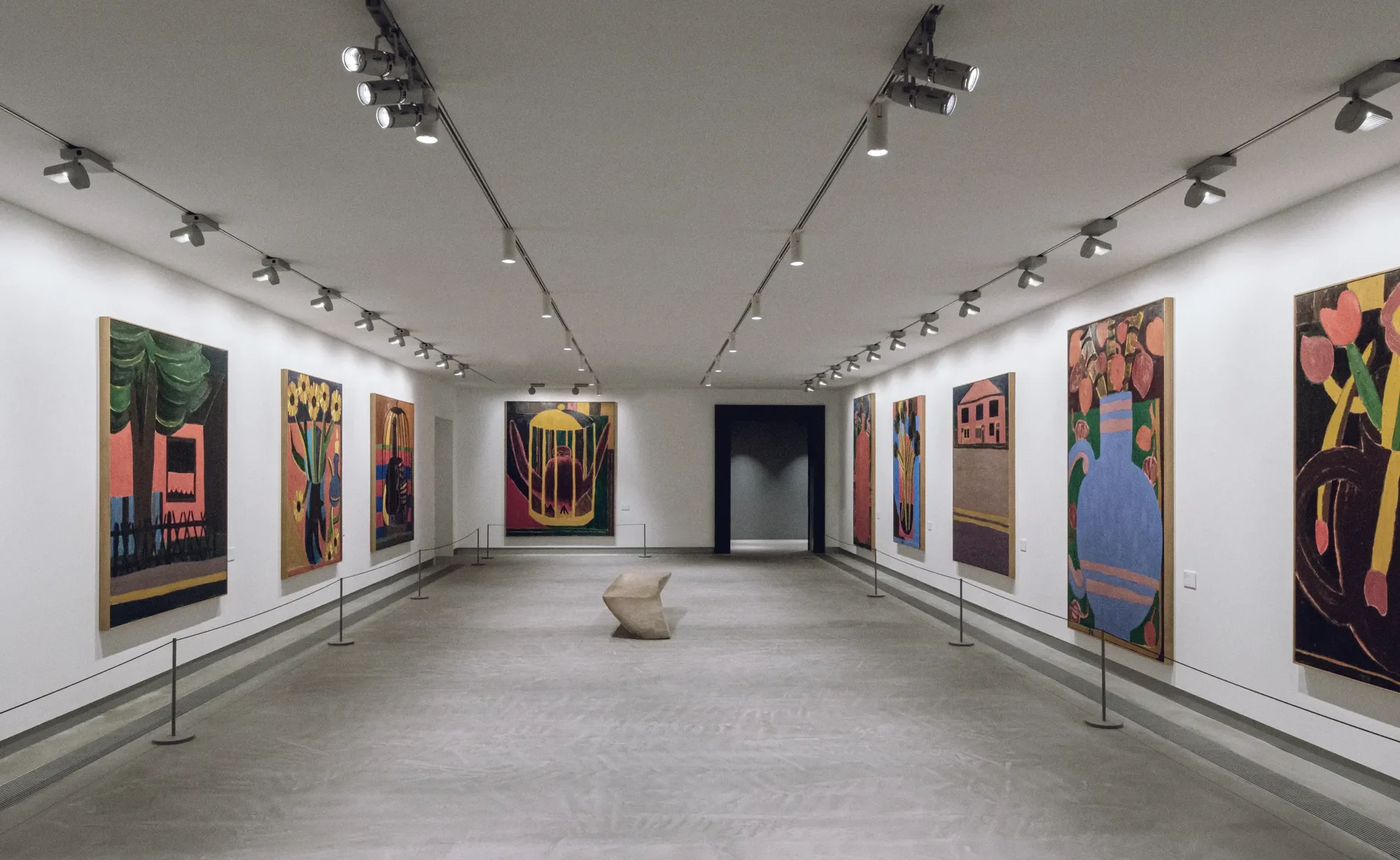
Museum Ordrupgaard- Lighting design by LIK Lighting
WHY DOES R9 MATTER?
R9 is one of the additional colour rendering indices in the traditional CRI system. It represents a strong red colour and is not included in the eight samples used to calculate the general Ra value.
This means that a light source can have a relatively high CRI while performing less well with strong reds.
R9 can therefore provide useful additional information where red tones are important, for example in skin tones, food, textiles or materials containing warm reds.
It should not, however, be treated as a complete measure of colour quality on its own.
WHY CAN THE SAME CRI LOOK DIFFERENT?
Colour appearance depends on the spectral composition of the light source.
Two sources can have the same colour temperature and similar CRI values while distributing energy differently across the visible spectrum. Those differences can affect how particular colours appear.
This is one reason why colour temperature and colour rendering should not be confused. Kelvin describes whether white light appears warmer or cooler. Colour rendering describes how colours appear under that light.
A specification therefore needs more than a Kelvin value and, in colour-sensitive applications, may need more information than Ra alone.
WHEN DOES COLOUR RENDERING MATTER?
Colour rendering is relevant whenever the appearance of colours and materials contributes to the function or experience of a space.
This may be particularly important when lighting:
artwork and exhibits
products and merchandise
food
textiles
timber, brick and other material surfaces
people and skin tones
The level of colour information needed should reflect the project. A space where subtle colour differences matter may require a more detailed assessment than an area where colour discrimination is less critical.

Royal Copenhagen- Lighting design by LIK Lighting
BEYOND CRI
CRI remains widely used, but colour science has moved on since the method was introduced. The CIE and IES TM-30 now share a newer fidelity index, Rf, based on 99 colour samples. In 2025, the CIE recommended that the lighting community begin adopting Rf, with Ra and Rf reported in parallel during the transition.
TM-30 adds a gamut index, Rg, and hue-specific data showing whether colours appear more or less saturated. This matters because fidelity is not always the only goal. In hospitality, retail and food environments, slightly enhanced saturation – particularly of reds – is often preferred over strict accuracy.
For many projects, Ra remains a useful starting point. Where colour is critical, additional colour data gives a more complete basis for comparing light sources.
COLOUR RENDERING IN PRACTICE
Colour rendering should be considered together with colour temperature, light levels, optics, materials and the purpose of the space.
A number on a datasheet cannot show exactly how a material will look in the finished interior. Where colour is critical, assessing the actual light source together with the relevant materials or objects can therefore be useful.
The question is not simply How high is the CRI? but Does the light render the colours that matter appropriately for this project?
Questions about colour rendering
Is CRI the same as colour temperature?
No. Colour temperature describes whether white light appears warmer or cooler and is measured in Kelvin. CRI describes colour fidelity under that light.
Is CRI 90 always better than CRI 80?
A higher Ra indicates closer average colour fidelity to the reference source, but Ra alone does not describe every colour or every aspect of colour quality. The application and additional colour data may also matter. Higher colour rendering can also come with slightly lower luminous efficacy, so the right level depends on the application.
What is R9 in lighting?
R9 is a special colour rendering index representing a strong red test colour. It is not included in the eight colour samples used to calculate the general Ra value.
Can two luminaires with the same CRI render colours differently?
Yes. CRI is an average value, and light sources with similar Ra values can differ in how individual colours are rendered.
Published: 28.092026
Related Knowledge
Understanding colour temperature
How two different characteristics of light influence the way colours, materials and interiors are perceived.
What is architectural lighting design?
Architectural lighting design is the planning of how light works within a space.
Illuminance and luminance: what is the difference?
Understanding the difference helps explain why measured light levels do not tell the whole story about how a space is perceived.
Planning a project?
