

IN THIS ARTICLE
What is illuminance?
What is luminance?
Why can the same illuminance look different?
How do surfaces affect luminance?
Why does luminance matter for visual comfort?
Illuminance and luminance in practice
Questions about illuminance and luminance
#UNDERSTANDING LIGHT
Illuminance and luminance describe two different aspects of light. One measures how much light reaches a surface. The other describes light from a surface or source in a particular direction. Understanding the difference helps explain why measured light levels do not tell the whole story about how a space is perceived.
THE ESSENTIALS
Light arriving and light seen
Illuminance describes how much light reaches a surface and is measured in lux (lx).
Luminance describes light from a surface or source in a specific direction and is measured in candela per square metre (cd/m²).
The distinction matters because two surfaces receiving the same illuminance can appear very different depending on their colour, reflectance, finish and viewing direction.
WHAT DOES CRI MEASURE?
The general Colour Rendering Index, Ra, compares how a set of eight test colours appear under a light source with how they appear under a reference light of a similar colour temperature. The eight samples are moderately saturated colours. Strongly saturated colours, such as deep reds, are not part of the average.
The result is expressed as a single value. A higher Ra generally indicates closer colour fidelity to the reference source.
But because Ra is an average, it cannot describe how every individual colour will appear. Two light sources with the same CRI can therefore produce noticeably different results.

Appropriate light for different surfaces. Example by LIK Lighting for MY CARS
WHAT IS ILLUMINANCE?
Illuminance describes the amount of light falling onto a surface.
It is measured in lux, where one lux corresponds to one lumen of luminous flux distributed over one square metre. A light meter placed on a desk, floor or other surface can measure the illuminance at that point.
Illuminance is widely used when defining lighting requirements because different activities need appropriate amounts of light on the relevant working or task surfaces.
But illuminance tells us about the light arriving at the surface. It does not describe how bright that surface will appear to someone looking at it.
WHAT IS LUMINANCE?
Luminance describes light from a surface or source in a particular direction.
It is measured in candela per square metre (cd/m²). Unlike illuminance, luminance is directional. The value depends on the surface or source and the direction from which it is viewed.
In practical lighting design, luminance is closely related to the visual impression of brightness. A luminous screen, a bright luminaire and a wall reflecting light can all have measurable luminance, even though the light reaches the eye in different ways.
WHY CAN THE SAME ILLUMINANCE LOOK DIFFERENT?
Imagine two surfaces receiving the same amount of light.
If one is pale and highly reflective and the other is dark and absorbs more of the incident light, they will not appear equally bright. At 300 lux, a white matt wall with 80% reflectance has a luminance of around 76 cd/m². A dark timber surface with 20% reflectance, under the same light, reaches only around 19 cd/m² – a quarter of the luminance, with the same measured light level. This is why lux values alone cannot describe the complete visual experience of a room.
Position, viewing direction and the distribution of light also matter. Lighting that produces an appropriate illuminance on a horizontal task surface may create a very different visual impression depending on what happens on the walls, ceiling and surrounding surfaces.
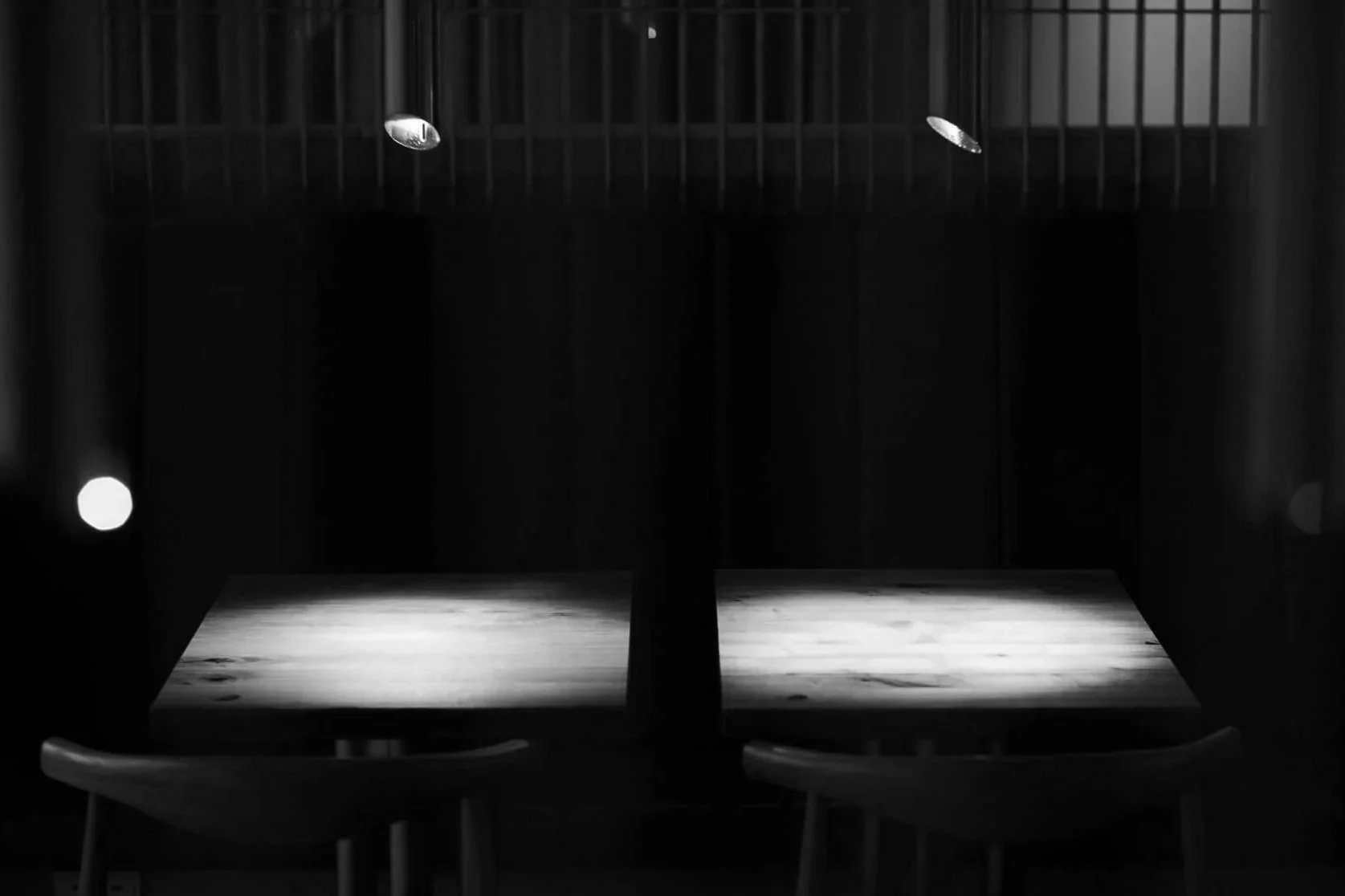
Soft reflections wood with LIK Lighting’s Sundance pendant
HOW DO SURFACES AFFECT LUMINANCE?
Materials are part of the lighting design. Colour and reflectance determine how much light a surface returns, as the example above shows, while the finish – matt or glossy – determines where that reflected light goes. See [Light and surfaces].
WHY DOES LUMINANCE MATTER FOR VISUAL COMFORT?
Our eyes respond not only to the amount of light present, but also to differences between brighter and darker areas within the field of view.
Large luminance differences can draw attention and create visual hierarchy. Excessive luminance or contrast in the wrong place can also contribute to glare and visual discomfort.
This does not mean that a room should have completely even luminance. Variation is often an important part of lighting design. The aim is to control the relationship between brighter and darker areas so that it supports the architecture, function and visual task.
ILLUMINANCE AND LUMINANCE IN PRACTICE
Illuminance and luminance answer different questions.
Illuminance asks: How much light reaches this surface?
Luminance asks: How much light is coming from this surface or source in the direction of the viewer?
Both can be important when evaluating a lighting solution.
Illuminance helps establish whether appropriate light reaches work surfaces and other relevant areas. Luminance helps explain how surfaces, light sources and contrasts are actually experienced within the field of view.
This is reflected in EN 12464-1:2021, which now sets requirements not only for task surfaces but also for walls, ceilings and – in many spaces – cylindrical illuminance, which describes light on faces and vertical surfaces.
Good architectural lighting therefore considers not only measured light levels, but also what happens to the light once it meets the architecture.
Questions about illuminance and luminance
Is illuminance the same as brightness?
No. Illuminance measures how much light reaches a surface. How bright that surface appears also depends on factors such as its reflectance, finish, surroundings and viewing conditions.
What is illuminance measured in?
Illuminance is measured in lux (lx).
What is luminance measured in?
Luminance is measured in candela per square metre (cd/m²).
Why does a new installation measure higher than the required lux level?
Lighting requirements in standards such as EN 12464-1 are maintained values – the minimum the installation must still deliver after ageing and dirt reduce its output. A new installation is therefore designed to start above that level.
Can two surfaces have the same illuminance but different luminance?
Yes. Surfaces receiving the same illuminance can reflect light differently because of their colour, reflectance and finish, resulting in different luminance values.
Published: 28.092026
Related Knowledge
Light and surfaces: how reflectance changes a space
How reflectance and surface finish change the way light looks in a space.
What is architectural lighting design?
How light levels, visual comfort, materials and technical requirements become part of the architecture.
What causes glare in lighting?
How luminance, contrast, optics and luminaire position influence visual comfort.
Planning a project?
